Dorothea Lange's Most Famous Photographs
Dorothea Lange made most of the pictures people still recognize in a few short years, between 1935 and 1939, while she worked for the federal Resettlement Administration, later the Farm Security Administration. Her job was to show Washington and the public what drought, farm mechanization and the Depression were doing to rural families. The photographs were printed in newspapers within days, filed with typed captions in a government picture library, and released for anyone to use. That is a large part of why they became so familiar: they were never anyone's private property.
What makes them last is how close Lange got. She talked with the people she photographed, wrote down what they told her, and moved in until a single face, gesture or doorway carried the whole story. The pages below take her most searched-for images one at a time: when and where each was made, who is in it, what happened to the picture afterward, and which original negative or print this archive reproduces from the Library of Congress collection.
-
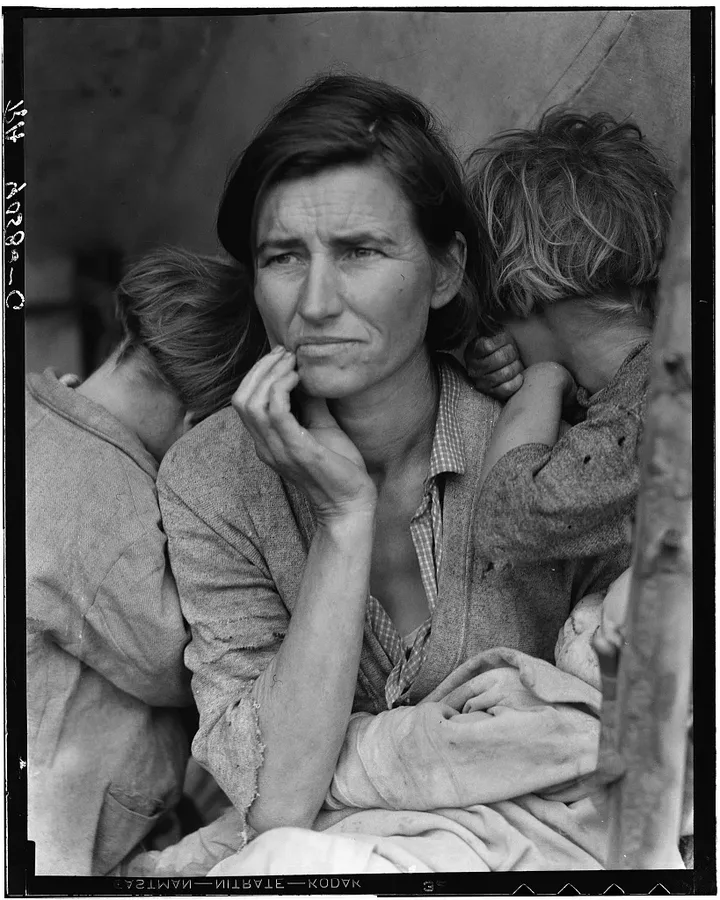
Migrant Mother (1936)
In March 1936, at a pea pickers' camp in Nipomo, California, Dorothea Lange photographed Florence Owens Thompson and her children in a handful of exposures. The closest frame became the defining image of the Great Depression.
The story behind it → -
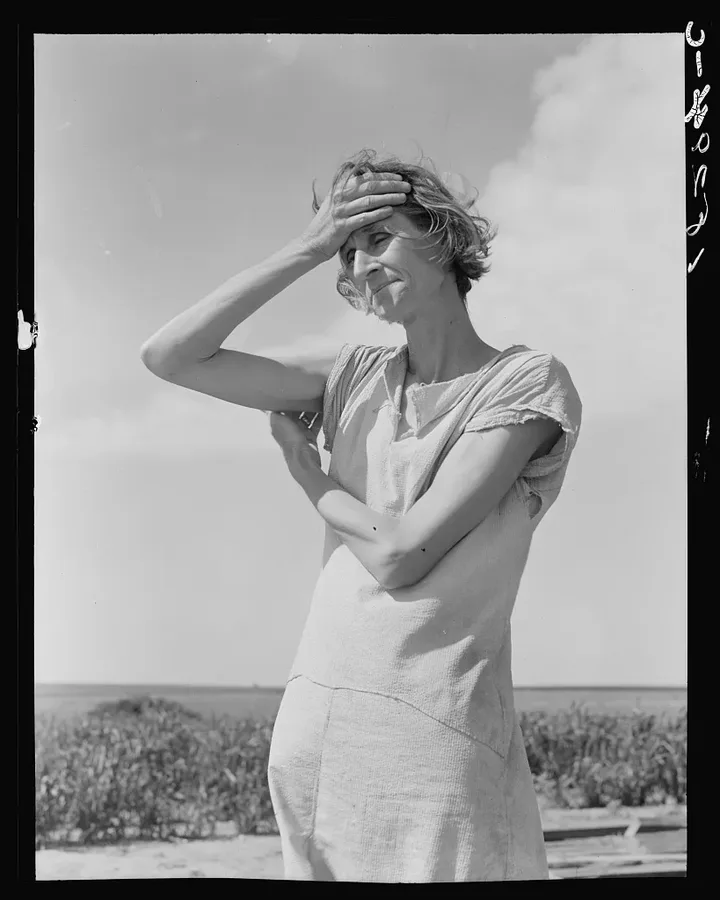
Woman of the High Plains (1938)
In June 1938, on the Texas Panhandle near Childress, Lange photographed Nettie Featherston, the wife of a migrant laborer, with one hand pressed to her forehead against a vast sky. The picture became one of Lange's most admired portraits of the Dust Bowl years.
The story behind it → -
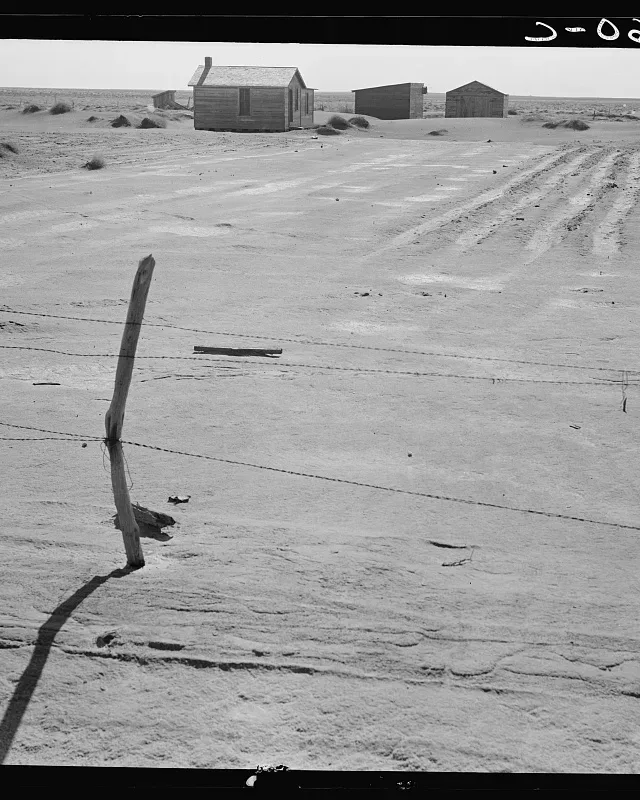
Abandoned Farm in the Dust Bowl (1938)
A leaning fence post, drifted sand and a cluster of empty buildings on the horizon: Lange's June 1938 view of an abandoned farm near Dalhart, Texas, shows the Dust Bowl as a landscape rather than a crowd of refugees.
The story behind it → -
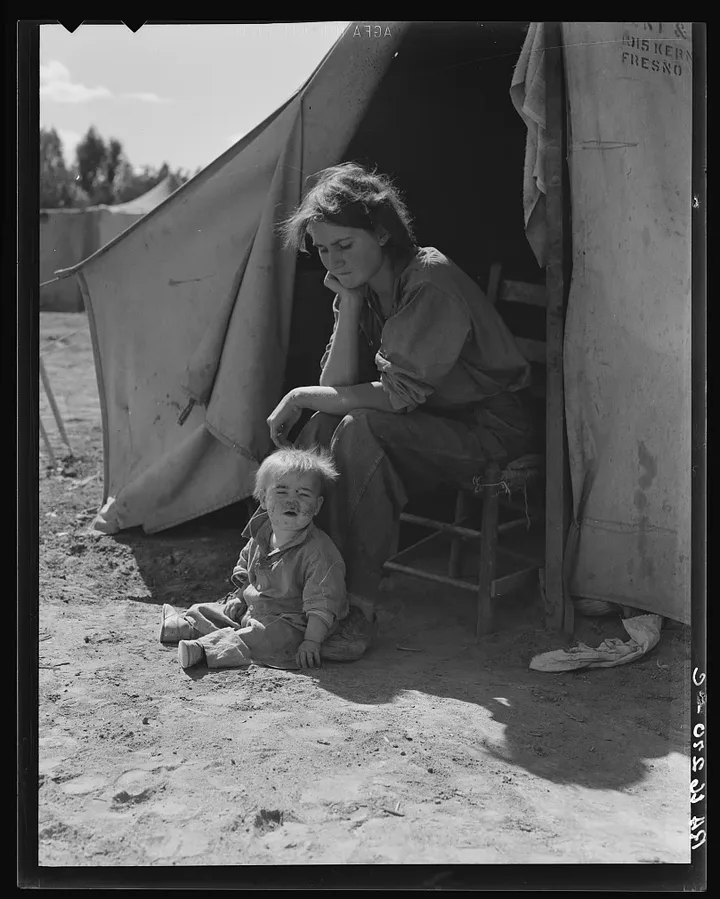
Eighteen-Year-Old Mother from Oklahoma (1937)
A young mother sits on a chair in a tent opening, chin on her hand, while her small child sits in the dirt beside her. Lange made the picture in March 1937 during a crisis among Dust Bowl migrants in California's Imperial Valley.
The story behind it → -
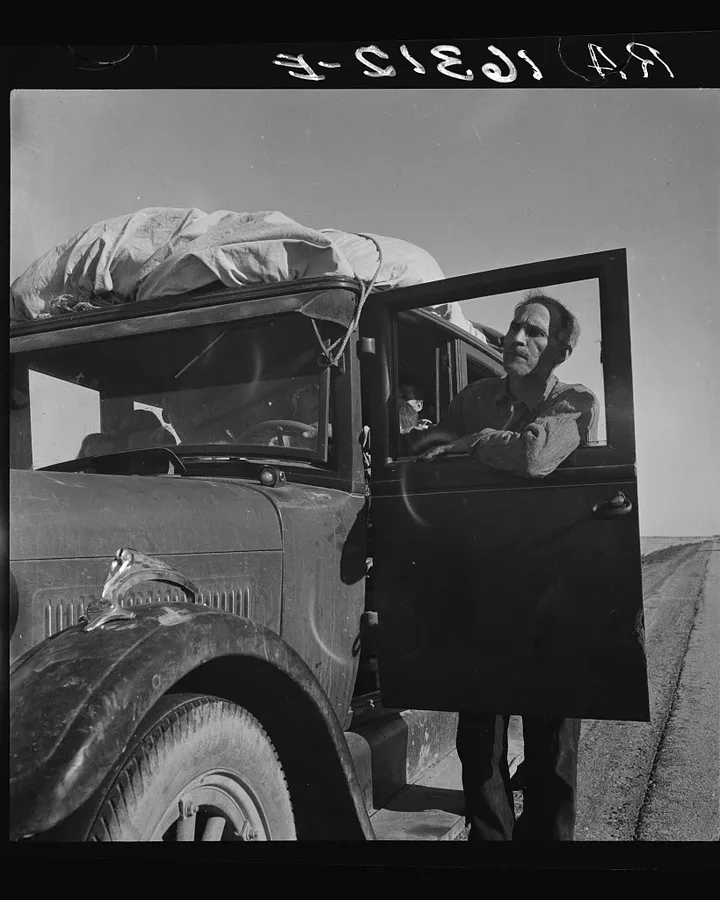
Stalled on the Desert (1937)
A gray-haired migrant leans on the open door of an overloaded car on an empty desert road. Lange's caption gives the rest: no money, ten children, from Chickasaw, Oklahoma, facing a future in California.
The story behind it → -
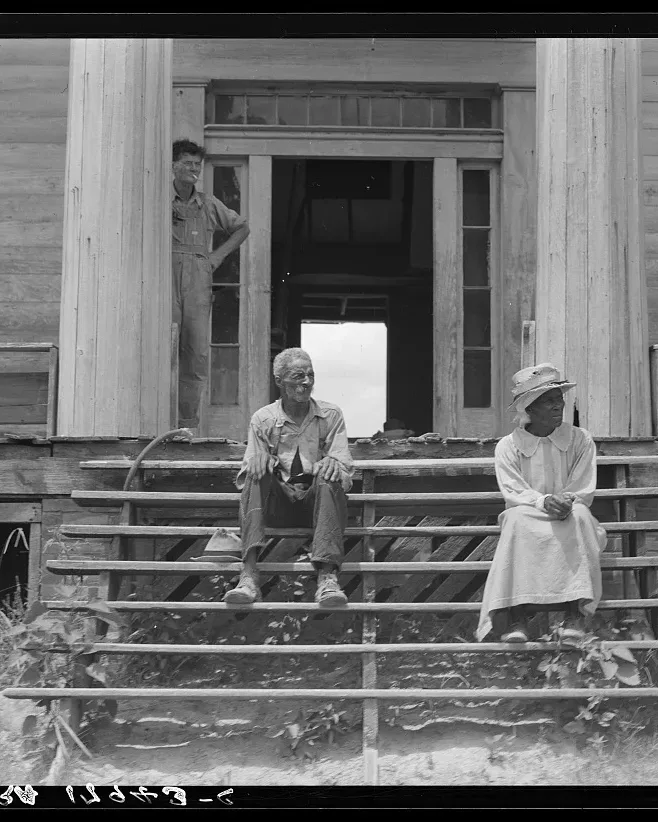
Ex-Slave and Wife, Greene County, Georgia (1937)
An elderly couple sit apart on the broken steps of a columned plantation house. Lange's July 1937 caption identifies the man as a former slave, linking the decay of the Old South's plantations to the people who still lived among them.
The story behind it →